top of page

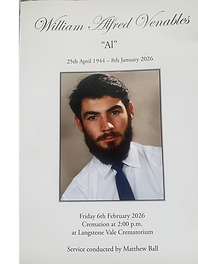
Dr WA Venables 1944 - 2026
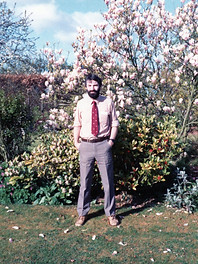
Dr Al Venables, died early on Friday morning 9 January 2026 when dementia finally wore him down. Here he is in his hirsute majesty - an intellectual, a scientist, a kind and loving man.
Al was a mainstay of the Department, with an all-round and deep knowledge of biology. He contributed so much as an excellent lecturer, researcher, and helpful colleague whenever needed.
His broad background in biochemistry, genetics and molecular biology, as well as in ornithology and environmental sciences, was phenomenal.
Always busy, he enjoyed entertaining us at parties, often with Julian, and often talented and enterprising students. This Old Microbes site includes many examples of Al’s talents, and with several photos of Sue, who worked as a highly effective assistant in David Hughes‘ MRC group from 1965 for many years, and so sadly passed away far too young.
Deepest sympathies extend to his two sons, their families, and the grandchildren, and to Jane who has cared for him over the years…and especially in his final illness.
David Lloyd
=======================
WAV by Jem Knapp
I first met Al 54 years ago in October 1971 when he was a young lecturer.
He had been told that a new PhD student was interested in birds, so he came down to my lab and told me about local birding spots and took me to Lisvane Reservoir, Peterstone Wentlooge and Roath Park, etc. This was a lifeline to me as I was rather lonely, knowing no one at all in the University or the area and Barbara was 250 miles away in Hull (necessitating frequent hitch-hiking visits back North).
Thus began a friendship which lasted 50+ years. We also played cricket together with the Microbes team (Al well, me streakily) and occasional tennis too, and I was welcomed into Al’s family doing occasional baby-sitting duties rewarded by a good tea with Sue’s Apple Pie!
Al, being a few years older and more experienced, taught me a lot about birds and ornithology. Al was really good at sharing his knowledge and his love of/passion for birds. I benefited from this but so did many others whose interest he helped develop.
After just 4 years in Cardiff, Ba and I moved on to Swansea, then Newcastle and finally Leeds.
Fortunately our friendship continued and indeed strengthened as our professional work interests got closer and we worked hard, though unsuccessfully to get joint research funding, although we did produce one joint review article. However common and complementary interests in Natural History and interest in our families, and a similar outlook to life in general cemented our friendship.
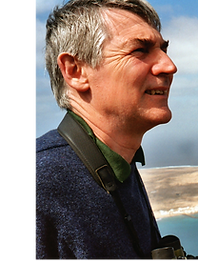
Despite having worked in the same place for only 4 years, over the years we spent many, many hours together studying nature, travelling to birding sights (by car, boat and plane) from pole to pole, and solving the world’s problems by conversation! Amongst other places we went to the Danube delta on a houseboat, to the Antarctic and then the Arctic. Almost as cold as this were winter trips to Whitford point on the Gower in Al’s blue VW beetle – which had holey floors and no heater!
Al didn’t just spot birds (which many people do) he studied them and helped advance our knowledge and understanding of them. His years of work as a County Recorder and author of reports and books helped advance and consolidate our knowledge of the birds of south east Wales and as such contributed to nature conservation. I was pleased and proud to be invited to join the celebration of my old friend’s lifetime contribution to Gwent ornithology, a lovely tribute to a great man.
Al of course wasn’t just a birder he was an excellent microbiologist, lecturer and researcher. He was a wonderful mentor who developed the understanding, skills, enthusiasm and careers of many, many students who went on in turn to become excellent scientists – a great contribution to them and society. He was a great educator.
Al’s organisational and creative skills came to the fore in the amazing Micro Christmas parties which in the 70’s he helped script and organise. He was a dab hand with a limerick and often won the limerick contest. One year I was lampooned in 2 of the winning entries – one of which is reproduced (fairly faithfully) below - he was forgiven long ago!
Al, of course, was a family man. His love of his family, past present and future was tremendous and it was great for us to have shared in the lives of each other’s families, children and grandchildren and celebrated their successes over the years. We also talked of our antecedents, most memorably of the wonderful, Granny Ravenscroft!
He was understanding, kind and generous. Al was a great man and an excellent person. I count myself fortunate to have known Al and pleased and proud to have been his friend.
RIP Al Venables, gone but not forgotten, a life well lived.
“A long-haired student from Nottingham
Would talk of birds and of spotting em
He’d drone on all day
In a tedious way
Sometimes you felt like garroting 'im!”
WAV ca. 1973
=======================
Dr Al Venables and his Contribution to Microbiology
Chris Saint and Peter McClure
5 May 2026
As we now know, in even more detail than was known in the 1970s, many man-made (or anthropogenic) compounds can persist in the environment – the current classic conundrum being PFAS, or “forever chemicals”, which seem to be totally resistant to environmental breakdown.
However, some of the research work commenced in the 1970s on the microbial destruction of a range of contaminants has gone on to lay the foundation for a whole new industry today that’s termed “bioremediation”. Al and his team made an important contribution to this.
As the synthetic chemical industry gathered pace following the second world war it became increasingly obvious that the processes by which many industrial products were made contributed significant pollution to the environment, as well as products that were simply discarded when no longer wanted. This created an interest in biological processes that might be employed to degrade the compounds and bring about “total mineralisation” to carbon dioxide, or other benign but naturally occurring compounds.
Coincidentally, in the early 80s, a scientist in the USA obtained the first patent on a living organism – a bacterial species of Pseudomonas constructed by genetic techniques to breakdown crude oil; the intention being to potentially use it to breakdown oil slicks.
The premise was that bacteria could be constructed, via genetic exchange techniques in the laboratory, to breakdown chemicals of concern when released into the environment. Not long after this, breakthroughs in DNA technology permitted specific genes of interest to be “snipped” from bacteria and reassorted in a test tube before being placed back into a bug – enabling designer microbes to be constructed for specific purposes.
In Al’s laboratory over the years there were a succession of projects that looked at a whole range of compounds and the bacteria that might remove them – examples would be waste toluene and xylenes from the nylon industry, aniline and p-toluidine dyes from the clothing industry and morpholine, a solvent used in the manufacture of a range of drugs and herbicides.
The long-term aim was to elucidate the biochemical pathways by which the bacteria could breakdown toxic chemicals and relate this to the genes involved in producing the enzymes that were responsible.
The work was effective in laying the foundations for constructing several varieties of bacteria that are used to produce novel and useful compounds from waste, to the point that only last year research reported in the journal Nature demonstrated that waste plastics could be converted to paracetamol by a constructed strain of E.coli.
Al’s legacy is also embodied in the work of his students, research assistants and research fellows, many of whom went on to apply the skills and versatile genetic tools that were developed and honed under his tutelage into diverse areas of science.
Al was a great teacher and mentor and his passion for microbiology shone through from his early interactions with prospective students thinking of enrolling in the Microbiology Department, right through to postgraduate and postdoctoral researchers.
Microbial genetics, led by Al, was one of the cornerstones that helped to build the Cardiff Microbiology Department into one of the most respected and foremost groups in the area of bioremediation, amongst other important areas. It’s fair to say that during the 70’s and 80’s microbial biodegradation was an exciting and cutting-edge area of research to be involved in.
Al’s laboratory made an important foundational contribution in this regard, and the outcomes of this work and his contribution will continue to support further development in this sphere for many years to come.
Tributes to Al Venables, 1944 - 2026
https://alvenables.muchloved.com/
bottom of page